
Programs for Children
Our Group Programs support communication, social, and early learning skills in a fun, play-based group setting. Led or supervised by a Speech-Language Pathologist, each group provides structured opportunities for children to build functional communication, interact with peers, and develop confidence through engaging, meaningful activities.
The Social Circle
Our Social Communication Program, The Social Circle, is designed to support children, teens, and adults with Autism Spectrum Disorder or Developmental Delays, who experience challenges with social interaction, conversation skills, and understanding nonverbal communication.
Learning may include some of the following topics:
Initiate and maintain conversations
Understand and use body language, facial expressions, and tone of voice
Understand and interpret social cues
Develop perspective-taking and empathy
Build confidence in peer interactions and group settings
Juniors (5-12 years):
Saturdays 1-2pm
Teens (13-18):
Mondays 6-7pm
Fee: $130 for 1 hour session
The Chill and Chat Club
(AAC Edition)
Empowering Voices Through Augmentative and Alternative Communication
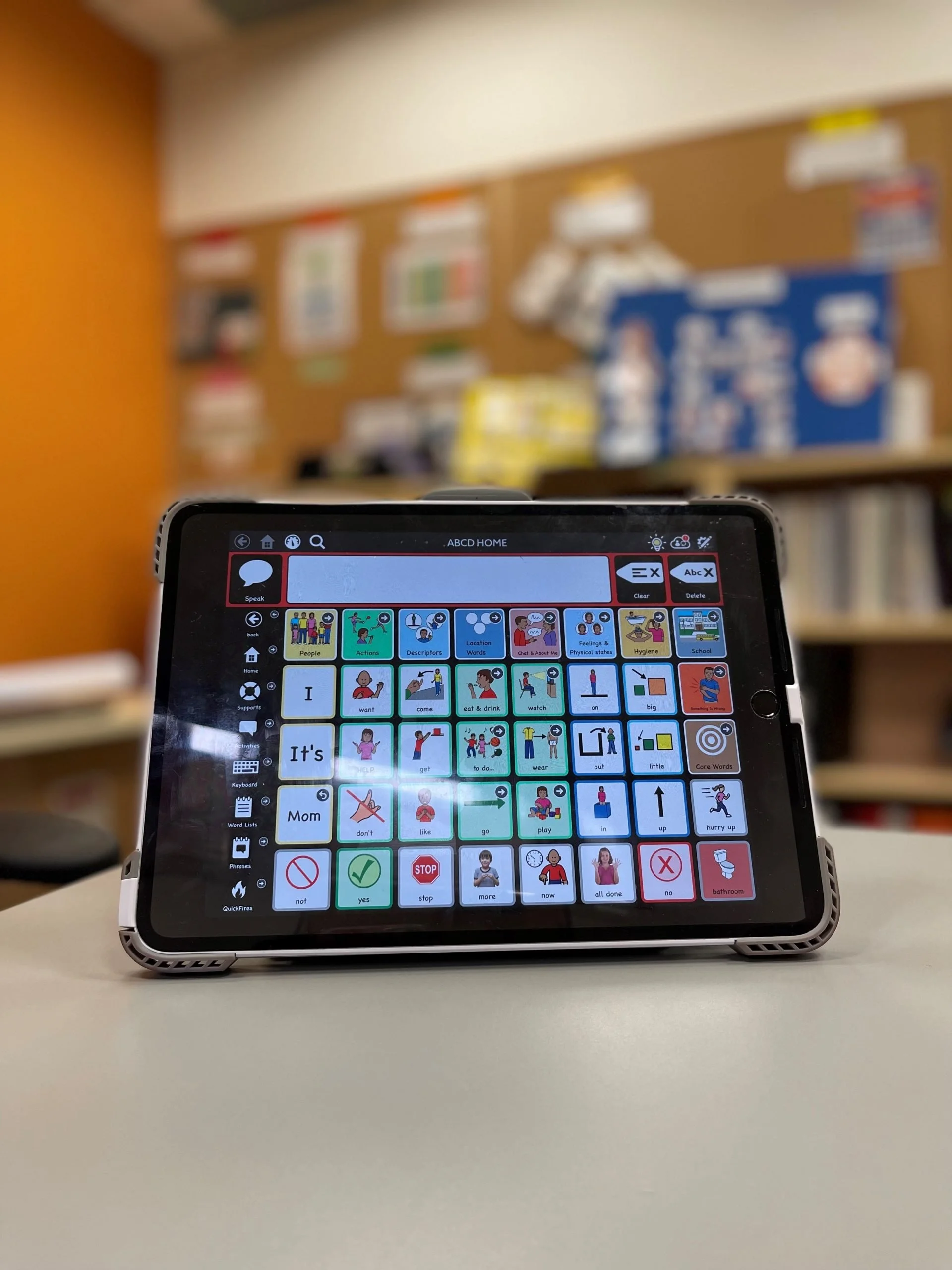
Join us for a fun, interactive, and supportive program designed specifically for individuals who use Augmentative and Alternative Communication (AAC). This program provides a rich environment for building communication skills, social interaction, and confidence using a wide range of communication systems.
Participants will:
Strengthen their ability to express wants, needs, thoughts, and feelings using their AAC system
Practice communication in meaningful, real-world activities and social settings
Build vocabulary and language structures suited to their age and developmental level
Engage in collaborative games, themed activities, and peer interaction
Receive individualized support and guided modeling from an experienced clinicians
Whether your child uses a speech-generating device, communication book, or other AAC tools, our program is designed to celebrate their voice and help them thrive. Small group sizes ensure personalized attention and a safe, encouraging environment for all participants.
Thursdays 6-7pm
Fee: $140 for 1 hour session

Pathways to Independence
Because independence starts with communication.
A life skills program designed to help teens (13+) develop the communication, language, and executive functioning skills needed for greater independence. This interactive group focuses on using language as a tool for navigating everyday life, including problem-solving, decision-making, self-advocacy, and managing responsibilities. Through hands-on activities and real-world experiences, teens will learn strategies to support planning, organization, flexible thinking, and effective communication at home, work, and in the community.
Tuesdays 6-7pm
Fee: $130 for 1 hour session
Contact Us for More Information